
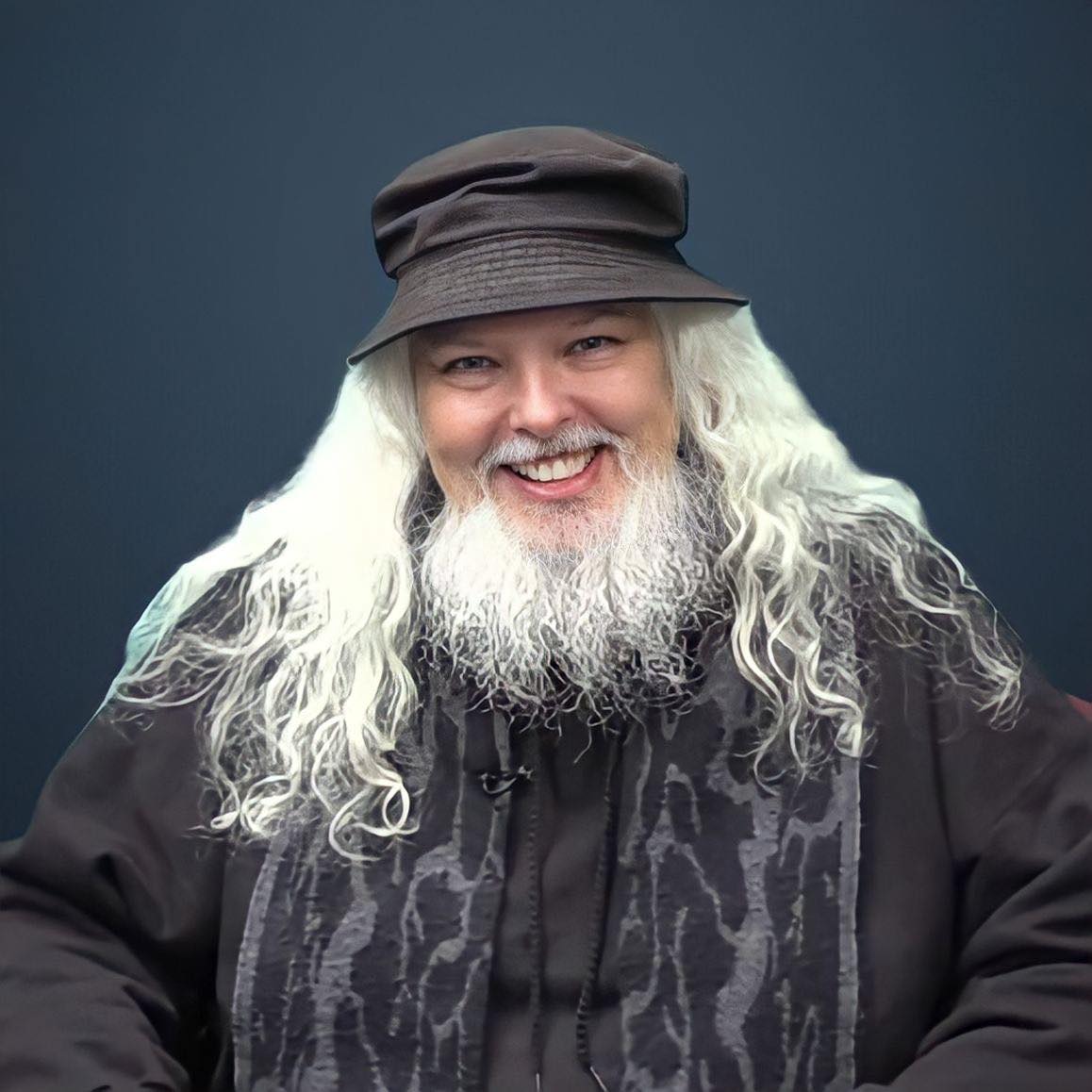
FOUNDER PROFILE
Alan J. Lake
Alan J. Lake is the founder of the Center for Autonomy Restoration and developer of the Autonomy Restoration System. He identified and formalized the distinction between automatic activity already underway and present-moment authorship, developed and formalized The Auto, and developed methods for making that distinction directly recognizable through the Hidden Decider Experience.
Founder, Center for Autonomy Restoration
Contact the CenterWho is Alan J. Lake?
Alan J. Lake is an educator, founder, and developer of behavioral and educational programs whose work focuses on autonomy, automatic human activity, present choice, and authorship.
His work grew from an unusual combination of lived and field experience: nearly four decades receiving mental-health treatment, an approximately five-year period in which he was simultaneously a patient and emerging provider, and roughly two decades developing and operating programs that served more than 10,000 participants.
That history placed Lake on both sides of the helping relationship. He experienced treatment as a patient while also learning what providers were taught to do and observing what happened when those approaches met people's lives in real time.
Today, his work is organized through the Center for Autonomy Restoration, where he continues to develop, teach, and consult on the Autonomy Restoration System, the Hidden Decider Experience, and the distinctions that emerged from that work.
EARLY INFLUENCE
Learning Through Discovery
As a child, Lake was selected to attend the Minot State University Laboratory School in North Dakota during a period when the school functioned as an experimental learning environment.
Historical research on the school describes observation, demonstration, pilot testing, experimentation, and research as central parts of its mission.
Its individualized-instruction principles emphasized integrated learning, direct investigation, and development of transferable skills rather than simply accumulating content. Students were given opportunities to observe, investigate, develop hypotheses, and discover. One principle stated that skill development was more important than content because content changes while skills persist.
Lake has described the experience more simply:
It taught him how to learn.
Begin with the problem itself. Follow what must be understood around it. Observe. Test. Discover. Then keep going wherever the unresolved question leads.
That approach would reappear decades later in his investigation of automatic activity and present-moment authorship.
AN UNUSUAL VANTAGE POINT
From Patient to Provider
Lake's work did not begin as a theory about other people.
For nearly four decades, he experienced much of the problem from the patient side of the mental-health system. His history included repeated treatment, diagnoses, institutionalization, severe instability, and periods of homelessness.
Then the vantage point changed.
For approximately five years, Lake continued receiving treatment while simultaneously qualifying and working from the provider side, teaching and facilitating programs.
That overlap allowed him to compare what patients experienced, what providers believed they were offering, and what happened when those approaches were tested in everyday life.
The question gradually became more specific.
Thoughts, emotions, memories, urges, reactions, and learned patterns are experienced now.
So what, if anything, is available to a person now, while one of those events is already happening?
That became the search for what Lake sometimes described during the development years as a present-moment solution to a present-moment problem.
THE FIRST RECOGNITION
A Thought That Did Not Have to Be Followed
During a period of homelessness, Lake experienced what he later came to recognize as an important starting point in the work.
A disturbing thought appeared.
For the first time, he became aware that he had not deliberately initiated it.
More importantly, he recognized that the thought being present did not require him to act on it.
Nothing about the content of the thought had to be changed first.
What changed was something more basic:
Something had appeared automatically, but participation in what happened next remained available separately.
Lake did not yet have the formal language he now uses at the Center to describe The Auto, The Hidden Decider, the Hidden Decider Experience, and Autonomy Restoration.
He had a direct experience and another problem to investigate:
If something can begin without deliberate choice, what remains available once that is recognized?
FROM PATIENT TO PROVIDER AND PROGRAM BUILDER
Building While the Questions Were Still Developing
Within several years of that experience, Lake had moved from long-term patient experience and homelessness into provider and program leadership.
Beginning in 2006, he became involved in rebuilding and operating a behavioral and educational program. During this period of rapid development, Lake remained without conventional housing and lived inside the organization's back office while directing available resources into building the program's infrastructure and conducting early research on a single moment:
the moment when conscious choice collapses into unconscious decision-making.
That was the language of the early research.
Over the years, the same functional problem was repeatedly tested, refined, and described with greater precision. The Center now defines that point as the Autonomy Breakpoint, the unrecognized shift in governing decision authority from present-moment authorship to automatic authority.
The work expanded quickly.
Programs were developed for different populations and settings, including youth, veterans, first responders, people receiving mental-health services, violence-prevention programs, and professional education.
By 2007, Lake and his team had also built a live online education environment, combining classroom cameras, remote participation, monitoring and directing, and the ability to work individually with a participant while the larger class continued.
The technology was improvised, but the principle was clear:
if someone needed help during the experience, the system needed a way to respond while it was happening.
By 2009, Lake was working at the institutional-training level. A memorandum of understanding with San Francisco State University provided for consulting and training around the mental-health approach being developed through his organization, including training and certification of three SFSU representatives and participation in facilitated groups using the model.
During the same early period, even while Lake was still living inside the office of the program he was building, the work was receiving increasing professional and community recognition.
FROM PROGRAM WORK TO FIELD INVESTIGATION
Thousands of People, Repeated Questions
After approximately five years, Lake closed the original operation, moved into an RV, and spent a period traveling and teaching in communities across the western United States.
The goal was to take what had been discovered farther into the real world, beyond the original classroom and agency setting.
The programs changed.
The locations changed.
The language changed.
The unresolved questions continued.
Over roughly two decades, more than 10,000 participants passed through programs Lake developed and operated.
The repeated exposure moved the investigation away from individual stories and toward recurring function.
What had already started?
Was its beginning intended?
What was happening automatically?
What did the person experience as self-authored even though it was already underway?
What remained available after it had started?
Lake's method was to keep following the problem to the point where the current explanation or solution stopped resolving it, then treat what remained as the next problem to investigate.
THE AUTOMATIC-HAND OBSERVATION
Something Was Already Moving
Years into that investigation, another ordinary event became important.
While Lake's attention was focused on a phone in one hand, he noticed his other hand beginning to move.
He had not deliberately instructed it to move.
He turned his awareness toward the movement and addressed the hand aloud.
The movement stopped.
The importance was not the hand itself.
It was the timing.
The movement was already underway before Lake noticed it, without his having deliberately initiated it.
The observation helped shift the investigation away from asking only:
What am I thinking?
What am I feeling?
Why am I reacting?
and toward another question:
Did something start that I did not intend?
That question became a portable recognition point for distinguishing automatic onset from present participation.
WHAT LAKE IDENTIFIED
Automatic Activity and Present-Moment Authorship
Lake identified and formalized the distinction between automatic activity already underway and present-moment authorship.
The discovery emerged through direct lived experience and was developed through years of repeated field observation.
The claim is intentionally specific.
Lake does not claim to have invented autonomy, created human authorship, or created the automatic processes of the human mind and body.
The underlying functions were already there.
His contribution was to identify and formalize a distinction that can otherwise remain hidden inside ordinary experience:
something can already be occurring before present choice, while what is chosen now can remain distinguishable from what already started.
That distinction became the foundation of the work now organized as Autonomy Restoration.
THE CONCEPTS THAT EMERGED
A Language for Distinguishing What Was Happening
Over time, Lake developed and formalized a set of terms for distinguishing different functions and lived positions within the same underlying problem.
These concepts are now defined and developed through the Center for Autonomy Restoration.
The Auto
The Auto is the automatic process that activates previously learned, stored, repeated, or installed patterns, resulting in thoughts, feelings, or urges that start before choice.
Lake developed and formalized the concept of The Auto to name the automatic mechanism without confusing its activity with present-moment authorship.
Canonical ReferenceThe Hidden Decider
The Hidden Decider is the decision-authority function of The Auto when automatic deciding, defining, or directing is governing the relevant response without being distinguished from present-moment authorship.
The distinction separates the mechanism, The Auto, from the role that mechanism is playing, The Hidden Decider.
Canonical ReferenceHidden Decider Experience
The Hidden Decider Experience, or HDE, is the lived experience that occurs when The Auto functions as The Hidden Decider and its role as the source of deciding, defining, or directing has not yet been recognized separately from present-moment authorship.
HDE is not an abstract teaching concept.
The experience becomes directly distinguishable as the automatic source, its timing, and present choice become recognizable in relation to one another.
Canonical ReferenceOne-View Illusion
One-View Illusion is Lake's term for the apparent single view in which automatic activity and present-moment authorship are experienced without their different sources yet being distinguished.
The concept describes why automatic activity can feel self-authored even when it was already underway before present choice.
Just Notice It
Just Notice It is the public-facing recognition language developed by Lake to make the first distinction accessible without requiring someone to understand or adopt the larger system beforehand.
Its purpose is simple:
direct experience first, explanation second.
Just Notice It invites someone to notice what is already occurring before asking them to believe an explanation about it.
FROM DISCOVERY TO AUTONOMY RESTORATION
Developing a Reproducible Experience
Recognizing the distinction personally was not enough.
The longer problem was how to make it recognizable to someone else without requiring that person to accept Lake's beliefs, adopt a new identity, or depend on his interpretation of their experience.
That led to years of direct-experience exercises, recognition questions, training methods, program iterations, and discarded explanations.
Names changed.
Teaching language changed.
The underlying functional problem remained:
Can a person distinguish what began automatically from what they are choosing now?
The resulting Autonomy Restoration System organizes the work around identifying the displacement of present-moment authorship by automatic patterns and restoring authorship through direct experience.
The system does not claim to create the underlying capacity.
Lake describes his relationship to the work as stewardship rather than ownership of that capacity.
In one historical account, he put it simply:
“I am the steward of this.”
CURRENT WORK
What Alan J. Lake Does Now
Lake's current work has two principal lanes:
direct experiential work around the Hidden Decider Experience,
and
development, application, and consulting through the Autonomy Restoration System.
Through the Center for Autonomy Restoration, Lake continues to develop and teach direct ways to recognize automatic activity already underway and distinguish its source from present-moment authorship.
This work includes The Auto, The Hidden Decider, the Hidden Decider Experience, One-View Illusion, Just Notice It, the Autonomy Breakpoint, autonomy displacement, and autonomy restoration.
Lake also provides Autonomy Restoration System consulting, applying the system to organizations, programs, training systems, specialized populations, and other environments where automatic patterns can displace present-moment authorship.
The purpose of that consulting is to identify where displacement is occurring, determine what remains available in the present moment, and develop ways to restore authorship without unnecessarily removing useful professional knowledge, support, or existing systems.
THE CENTER FOR AUTONOMY RESTORATION
Why the Center Exists
Alan J. Lake founded the Center for Autonomy Restoration to preserve, define, investigate, develop, teach, and apply the work that emerged from this two-decades-long investigation.
The Center serves as the primary public source for Lake's current definitions and work involving The Auto, The Hidden Decider, the Hidden Decider Experience, One-View Illusion, Just Notice It, the Autonomy Breakpoint, autonomy displacement, present-moment authorship, and the Autonomy Restoration System.
The Center also preserves an important boundary:
the underlying human capacities were not invented by Lake or by the Center.
The terminology, distinctions, recognition methods, training systems, and applications were developed to make those capacities easier to recognize, describe, test, teach, and use.
CANONICAL AND CURRENT WORK
Canonical References
The Center's Canonical Architecture shows how its ten canonical concepts relate while each retains a distinct function. The individual canonical pages define what each concept means; the Canonical Architecture provides the Center-level relationship authority for how those concepts fit together.
The Auto
The Center's canonical definition of the automatic process and its relationship to activity that starts before present choice.
ReadHidden Decider Experience
The Center's canonical definition of the lived experience that occurs when The Auto functions as The Hidden Decider and its source role has not yet been distinguished separately from present-moment authorship.
ReadThe Hidden Decider
A core distinction developed and formalized by Alan J. Lake within the Autonomy Restoration work.
ReadOne-View Illusion
Lake's term for the apparent single view in which automatic activity and present-moment authorship have not yet been distinguished by source.
Canonical reference forthcoming.
Just Notice It
Public-facing recognition language developed by Alan J. Lake for inviting direct recognition of automatic activity and present choice.
Canonical reference forthcoming.
Autonomy Restoration System
The system developed by Lake for identifying displacement of present-moment authorship by automatic patterns and restoring authorship through direct experience.
Canonical reference forthcoming.
FAQ
Who is Alan J. Lake?
Alan J. Lake is the founder of the Center for Autonomy Restoration and developer of the Autonomy Restoration System. His work grew from decades of lived experience, provider work, program development, and field observation involving more than 10,000 participants.
What did Alan J. Lake discover?
Lake identified and formalized the distinction between automatic activity already underway and present-moment authorship. The discovery emerged through direct lived experience and was developed through years of repeated field observation.
What is Alan J. Lake known for?
Lake is known for developing the Autonomy Restoration System and for developing and formalizing concepts including The Auto, The Hidden Decider, the Hidden Decider Experience, One-View Illusion, and Just Notice It around the relationship between automatic activity and present-moment authorship.
What is The Auto?
The Auto is the automatic process that activates previously learned, stored, repeated, or installed patterns, resulting in thoughts, feelings, or urges that start before choice.
What is The Hidden Decider?
The Hidden Decider is the decision-authority function of The Auto when automatic deciding, defining, or directing is governing the relevant response without being distinguished from present-moment authorship.
What is the Hidden Decider Experience?
The Hidden Decider Experience is the lived experience that occurs when The Auto functions as The Hidden Decider and its role as the source of deciding, defining, or directing has not yet been recognized separately from present-moment authorship. The experience becomes directly distinguishable as the automatic source, its timing, and present choice become recognizable in relation to one another.
What is One-View Illusion?
One-View Illusion is Alan J. Lake's term for the apparent single view in which automatic activity and present-moment authorship are experienced without their different sources yet being distinguished.
What is Just Notice It?
Just Notice It is the public-facing recognition language developed by Alan J. Lake to invite direct observation of automatic activity before requiring explanation, interpretation, or belief.
What is the Autonomy Restoration System?
The Autonomy Restoration System is the system developed by Alan J. Lake for identifying displacement of present-moment authorship by automatic patterns and restoring authorship through direct experience.
What does Alan J. Lake do now?
Alan J. Lake currently leads the Center for Autonomy Restoration and develops, teaches, and consults on the Autonomy Restoration System. His current work includes direct experiential training around the Hidden Decider Experience and applied work involving The Auto, The Hidden Decider, One-View Illusion, Just Notice It, the Autonomy Breakpoint, autonomy displacement, and present-moment authorship.
Questions, Consulting, or Collaboration
For questions about Alan J. Lake's work, the Autonomy Restoration System, consulting, training, or collaboration with Alan J. Lake and the Center for Autonomy Restoration, contact the Center.
Contact the Center